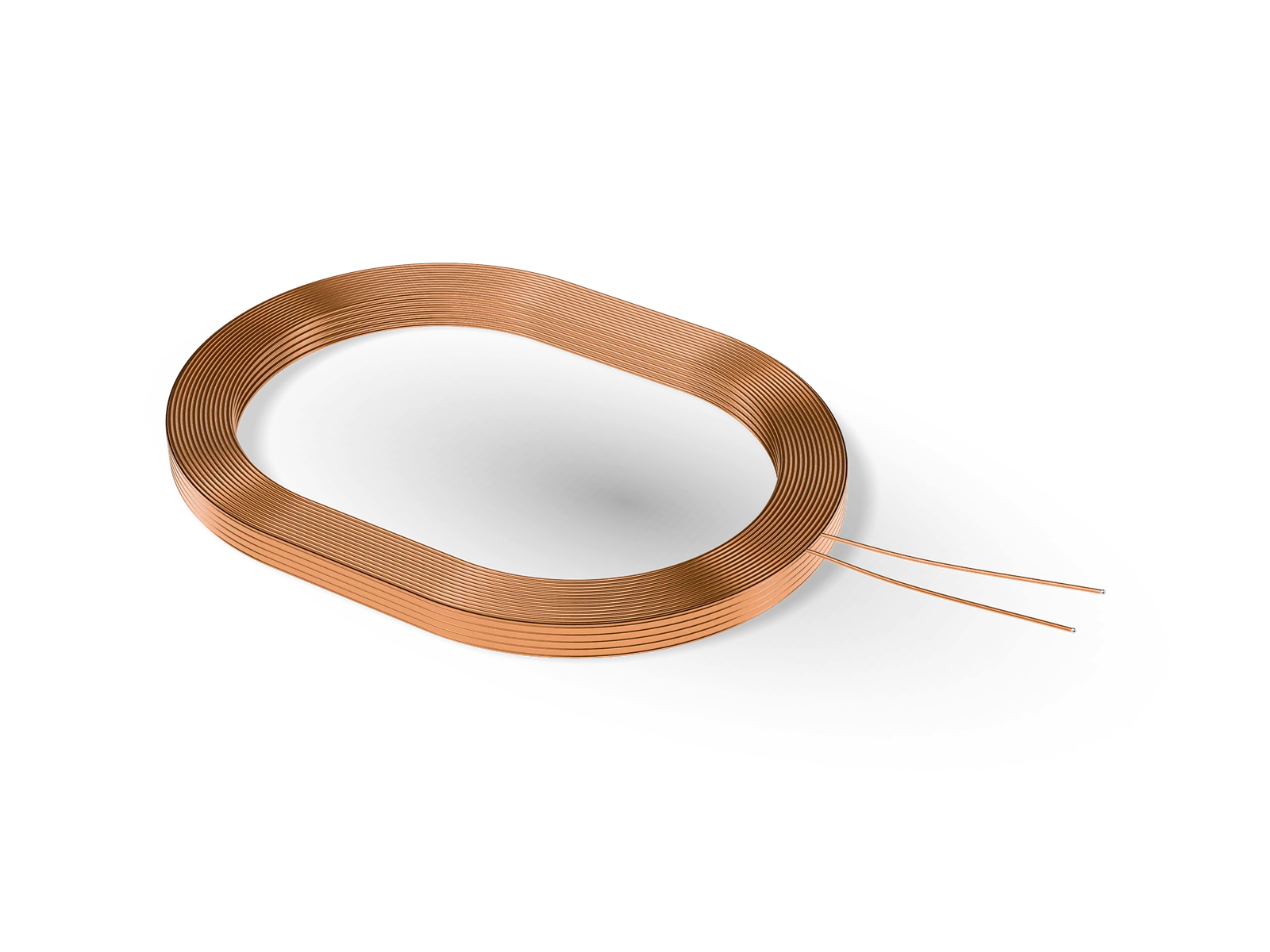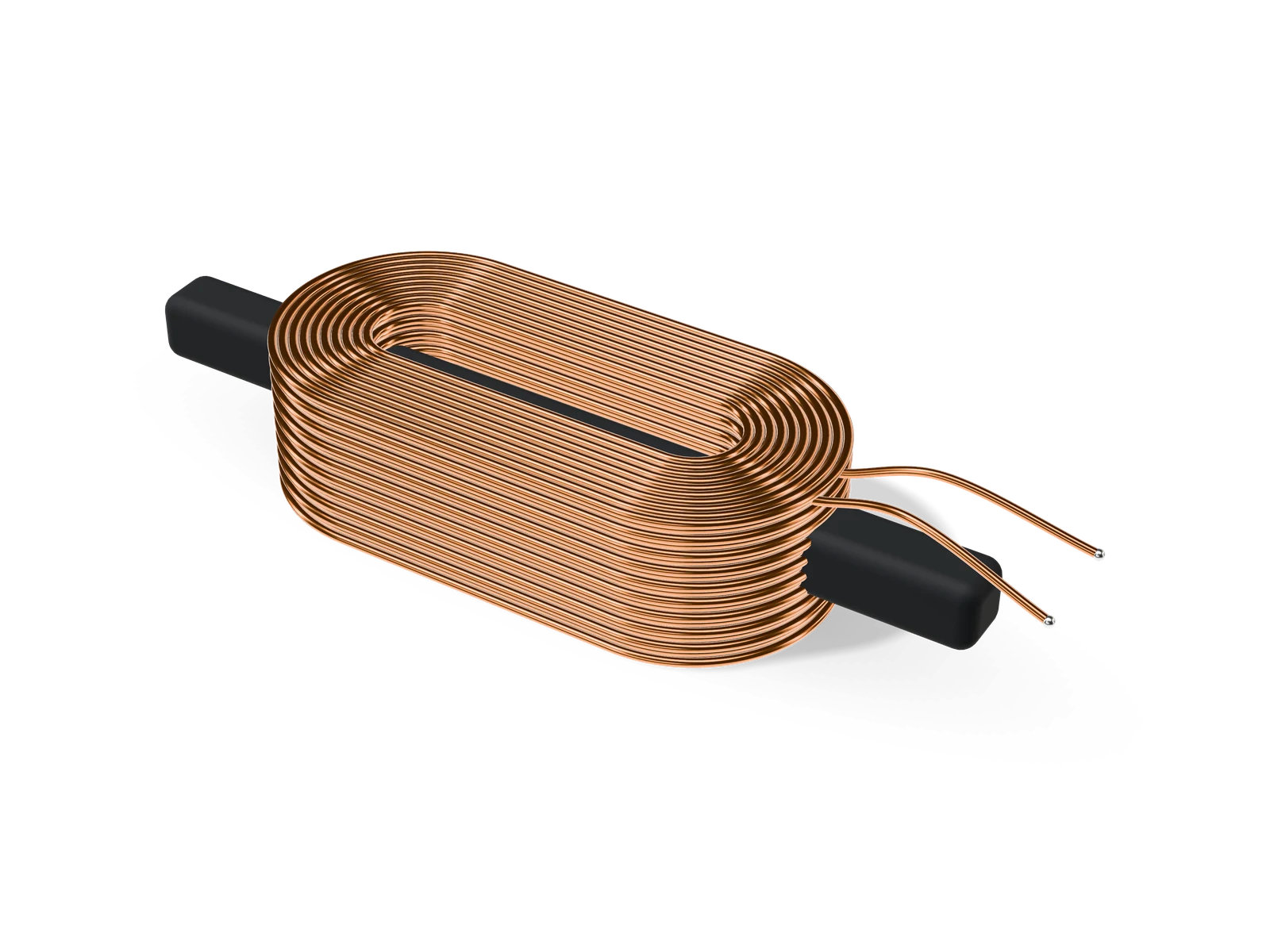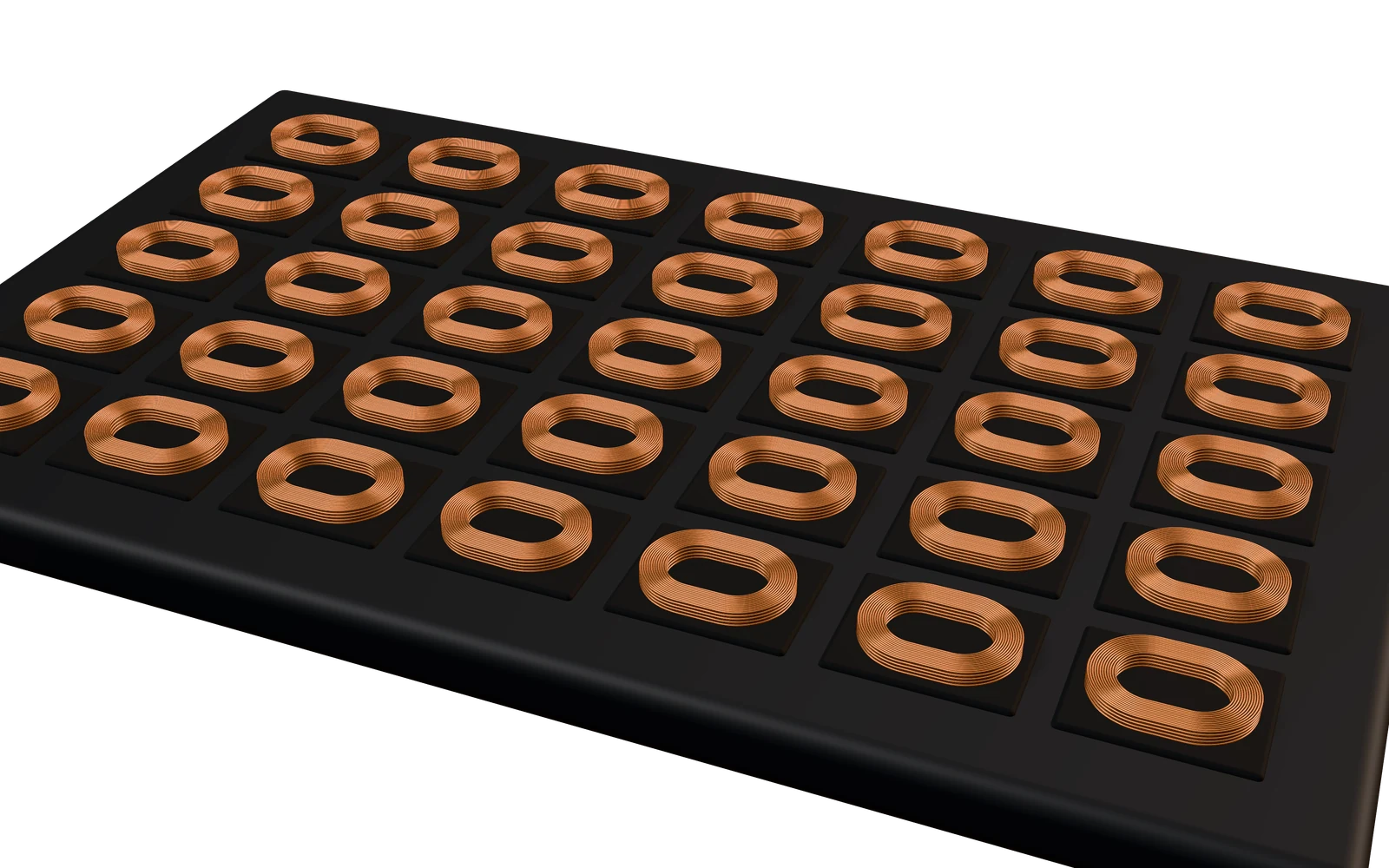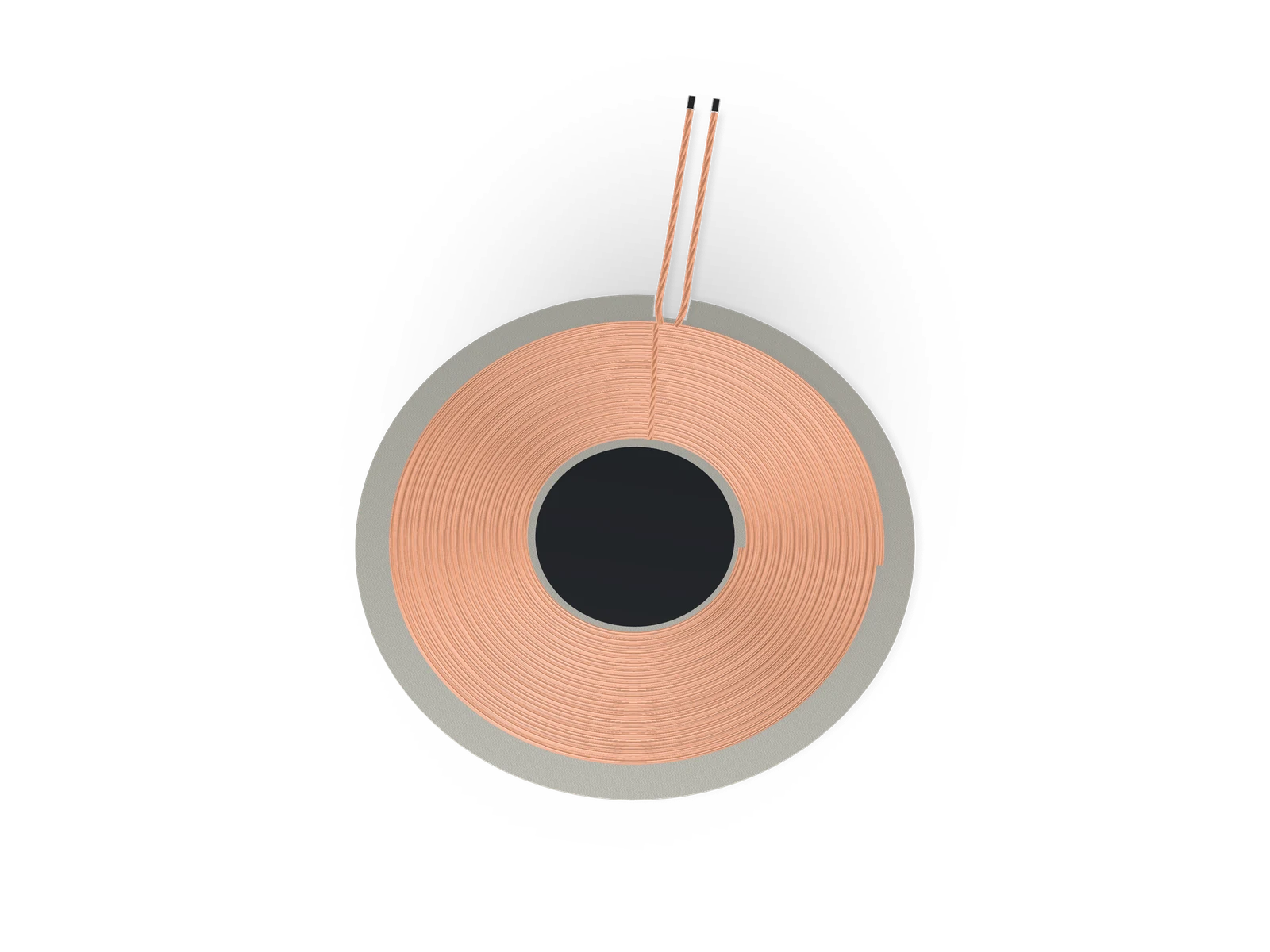
In an orthocyclic coil each turn of the second layer sits in the groove between two turns of the first. The cross-section becomes a hexagonal packing, the densest arrangement round wire allows.
Why it matters
- More wire in the same space. The theoretical fill is π/(2√3), about 90.7% of the winding cross-section. That figure counts the whole wire including its enamel, so the copper share is lower and depends on the insulation thickness. Random windings fill noticeably less.
- Predictable geometry. Every turn has a known position, so outline and height repeat from part to part.
- Better heat path. Fewer air gaps mean lower thermal resistance from the inner turns.
What it costs
Orthocyclic winding needs precise wire guidance, steady tension and a defined crossover zone where each layer steps over. Winding is slower and setup takes longer.
When random winding wins
For bobbin coils with thousands of turns, where the outline tolerance is generous and cost dominates, a controlled random winding is usually the sensible choice.
Questions and answers
- Is 90.7% the copper fill factor?
- No. 90.7% is the share of the cross-section occupied by round wire in hexagonal packing, including the enamel. The copper fill is lower and depends on wire size and insulation grade.