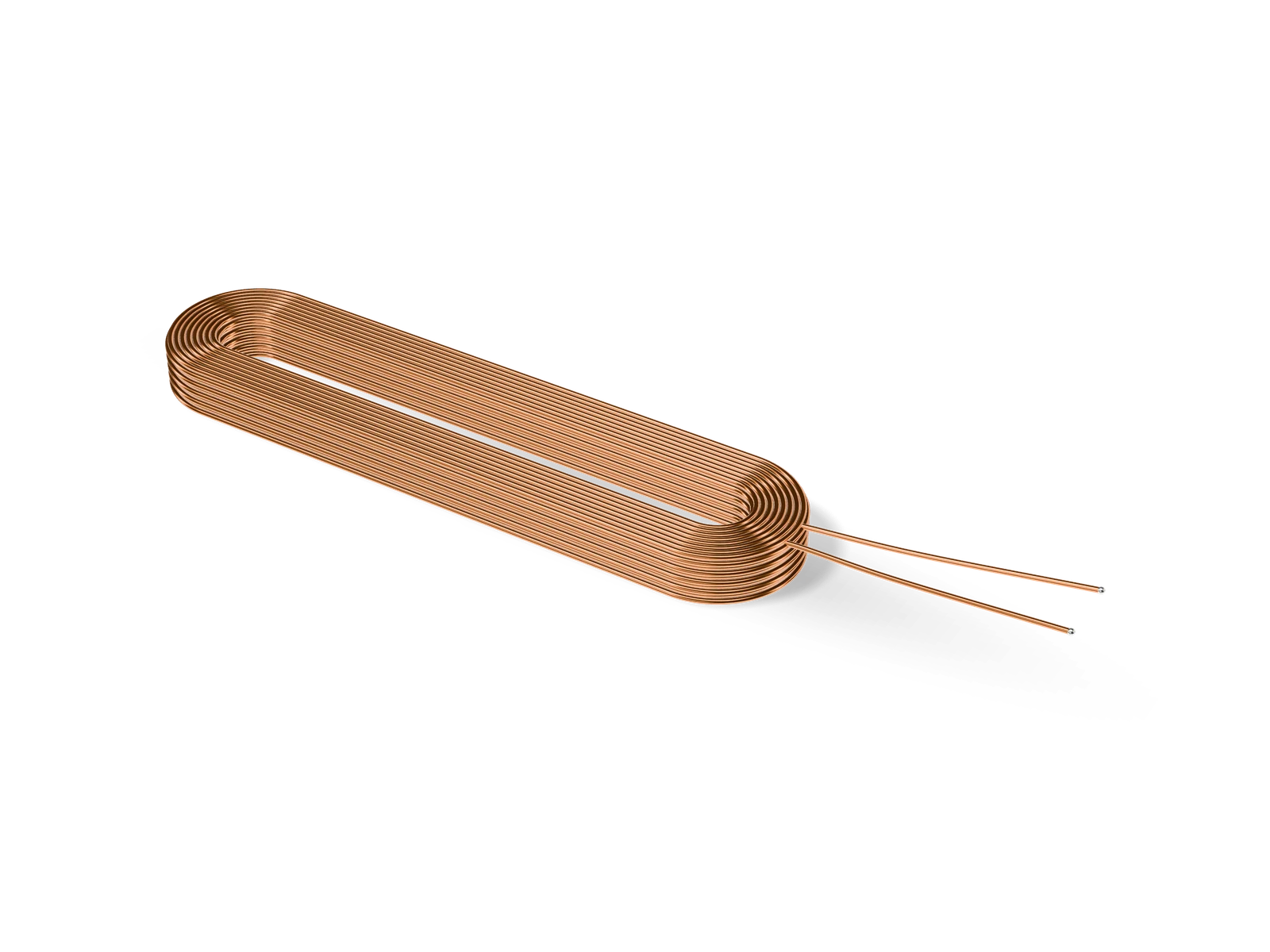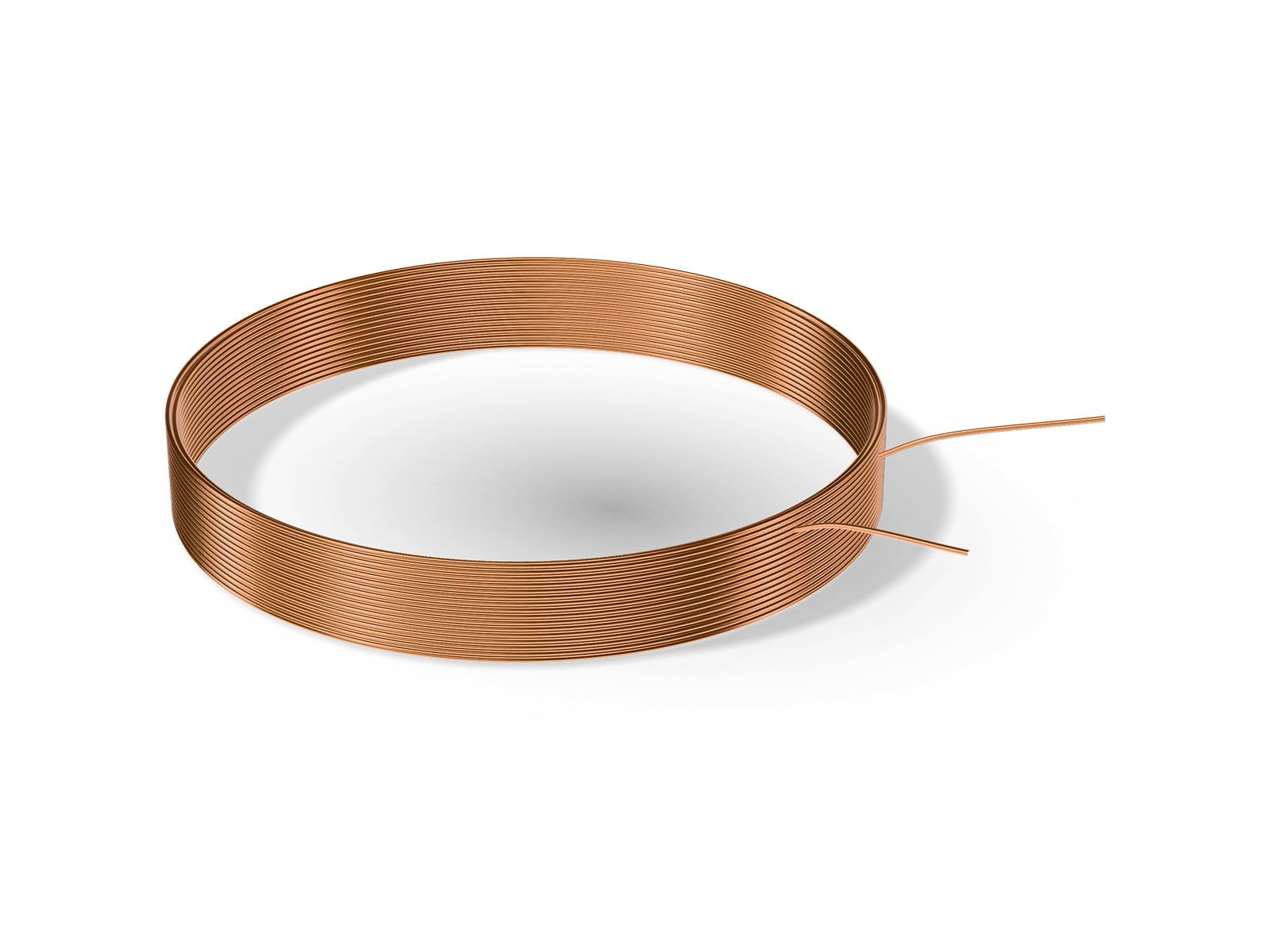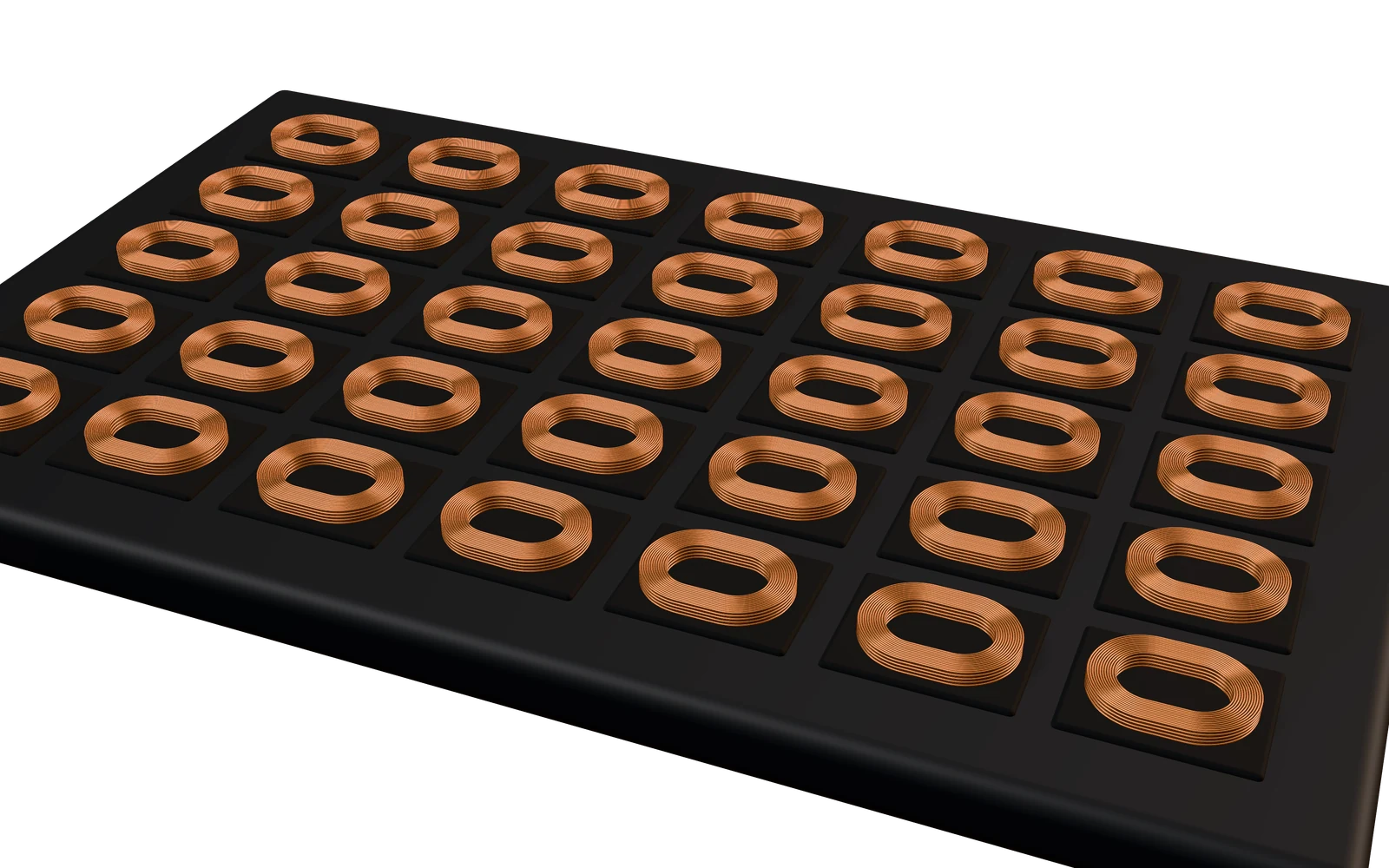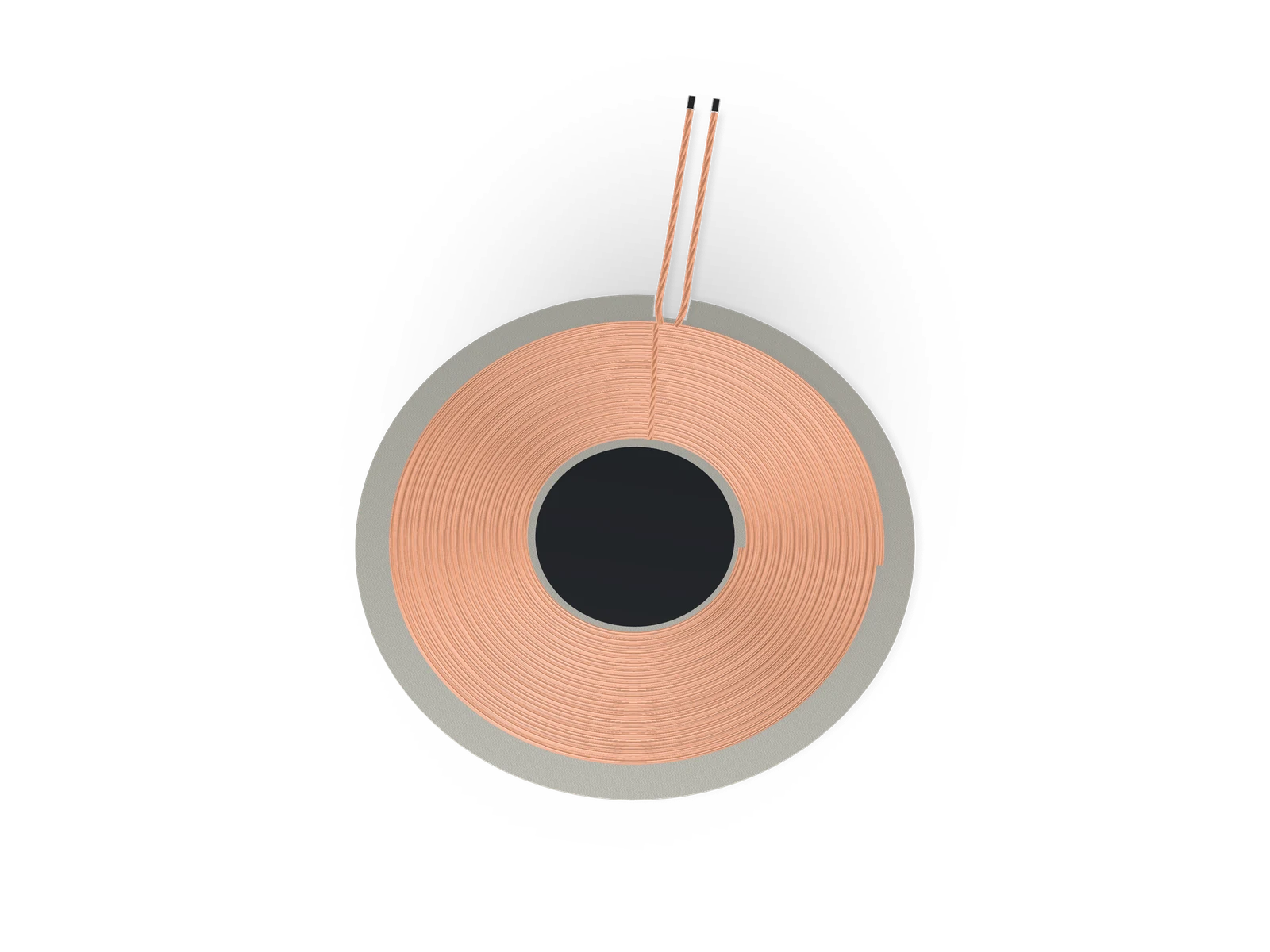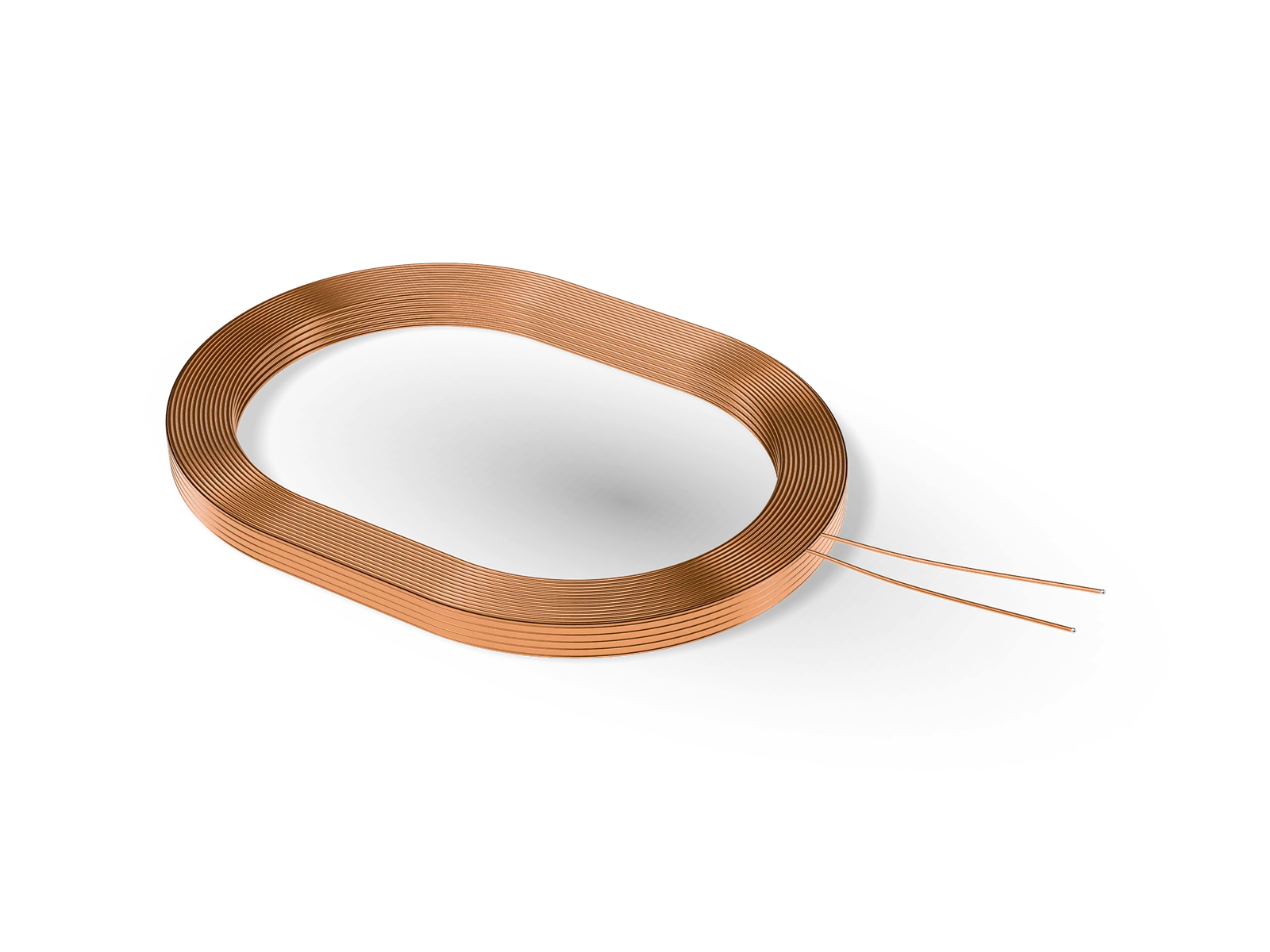
Self-bonding wire carries an extra bond coat over the insulation. Activate it and adjacent turns fuse into a solid coil that needs no bobbin.
Hot air
Hot air is blown onto the wire as it is wound. Fast and clean, and widely used for small air-core coils.
Solvent
A solvent such as alcohol activates the bond coat during winding. Useful for very fine wire where hot air could disturb the turns.
Resistance heating
Current through the finished coil heats it from inside. It gives an even bond through thick coils, at a slower cycle.
Reflow behaviour
Most bond coats are thermoplastic and soften again when reheated; heat-curing types set permanently. If the coil goes through lead-free reflow, check the bond coat’s rating and confirm with a reflow test on samples.