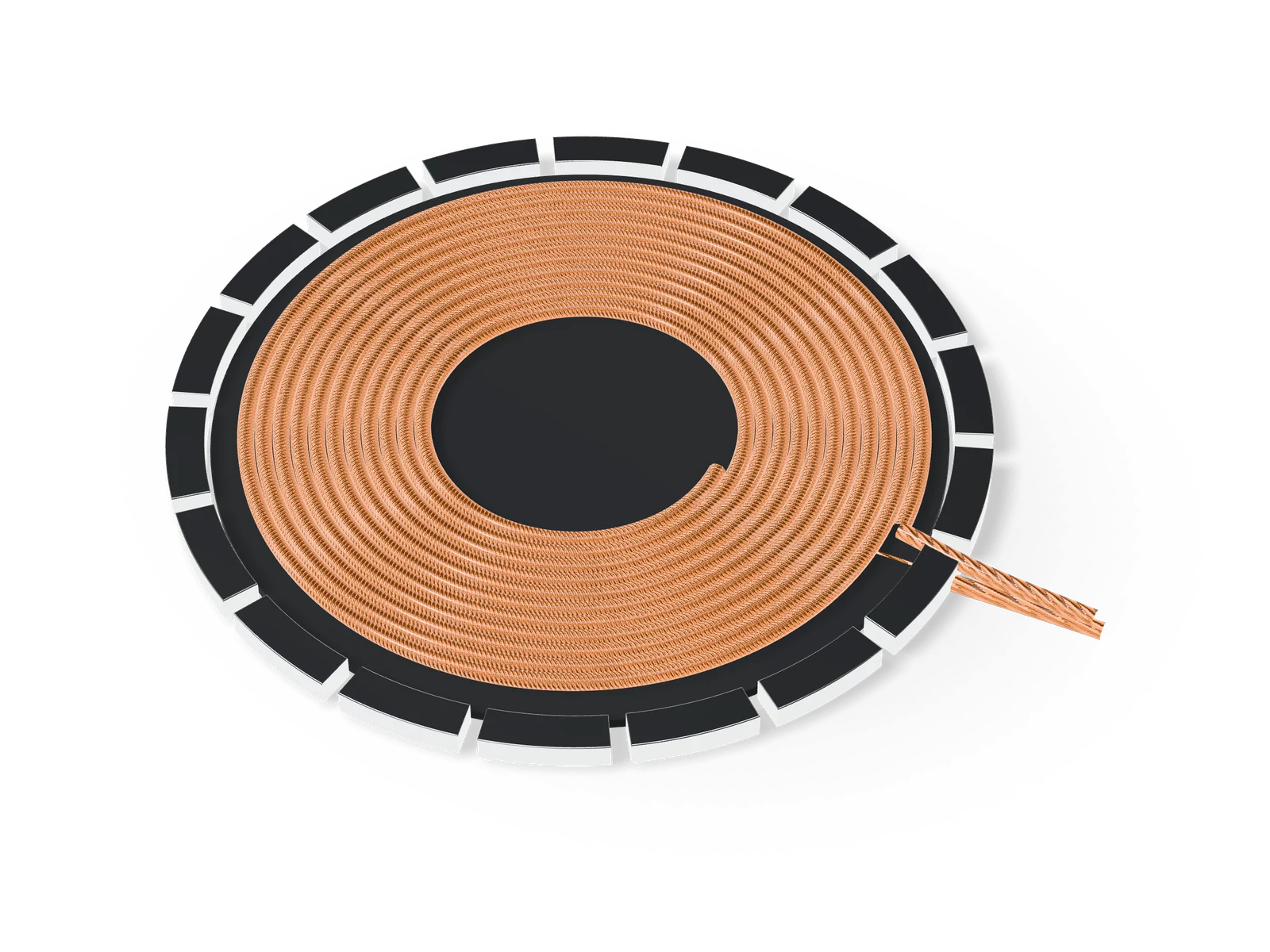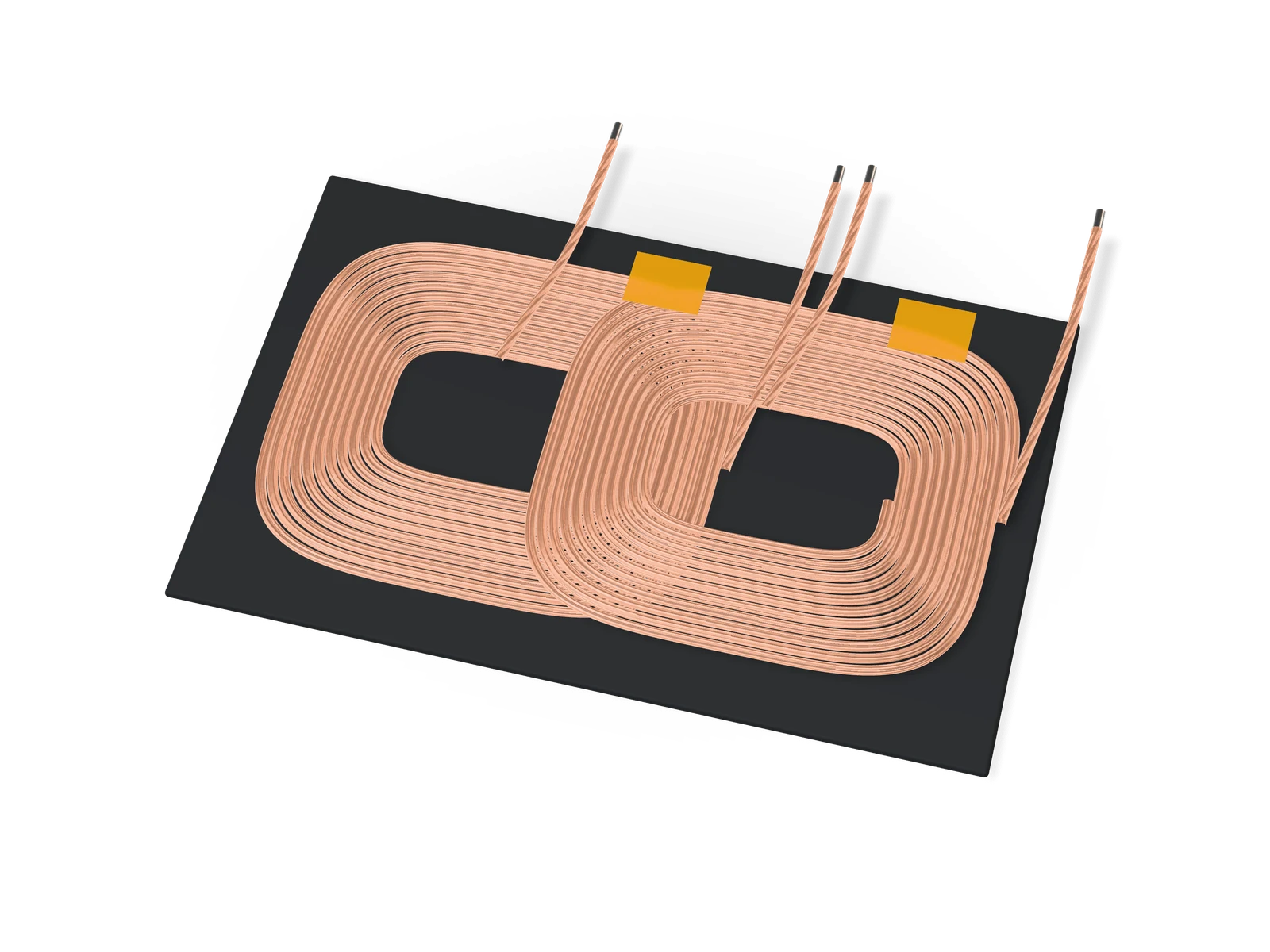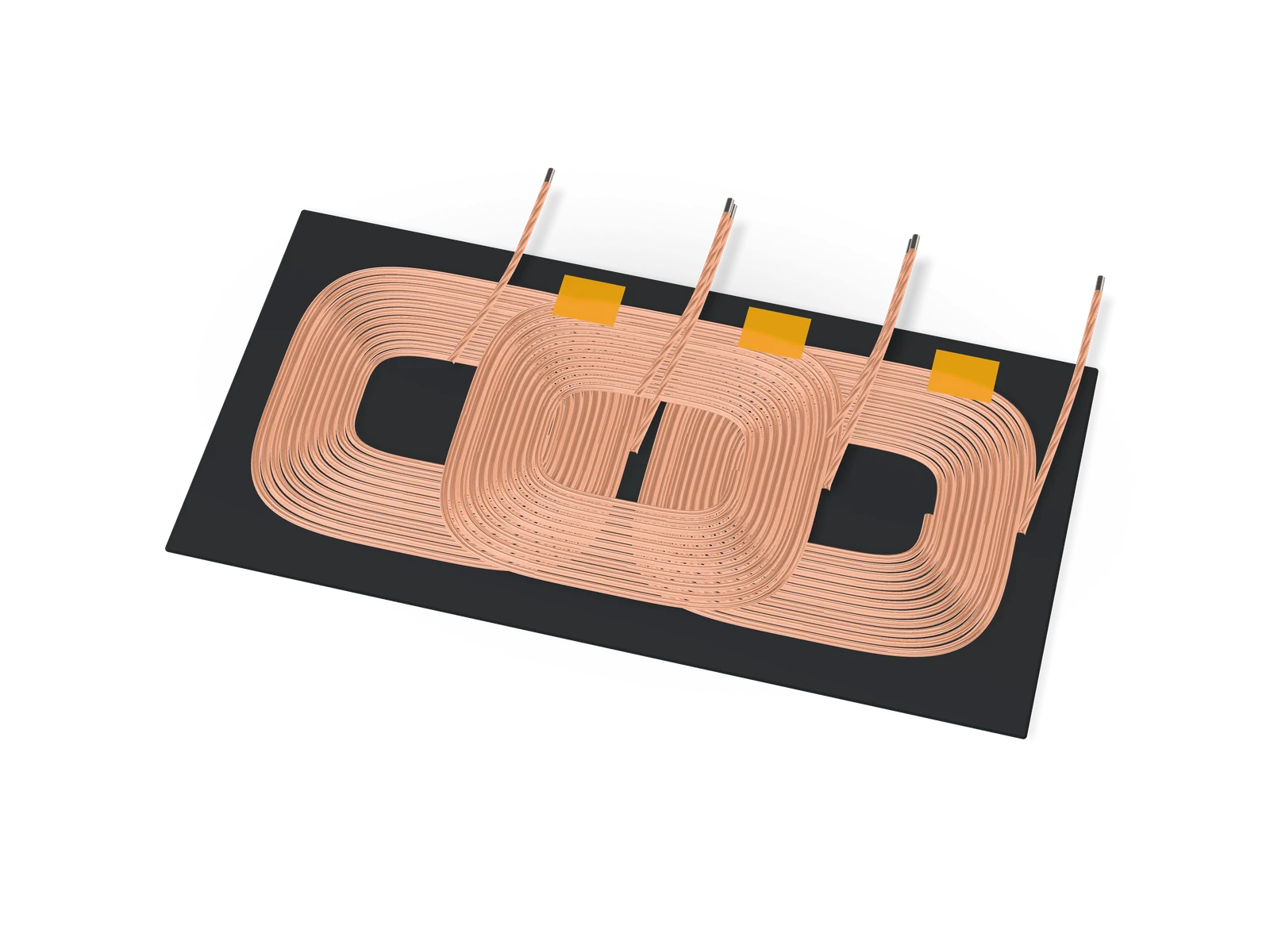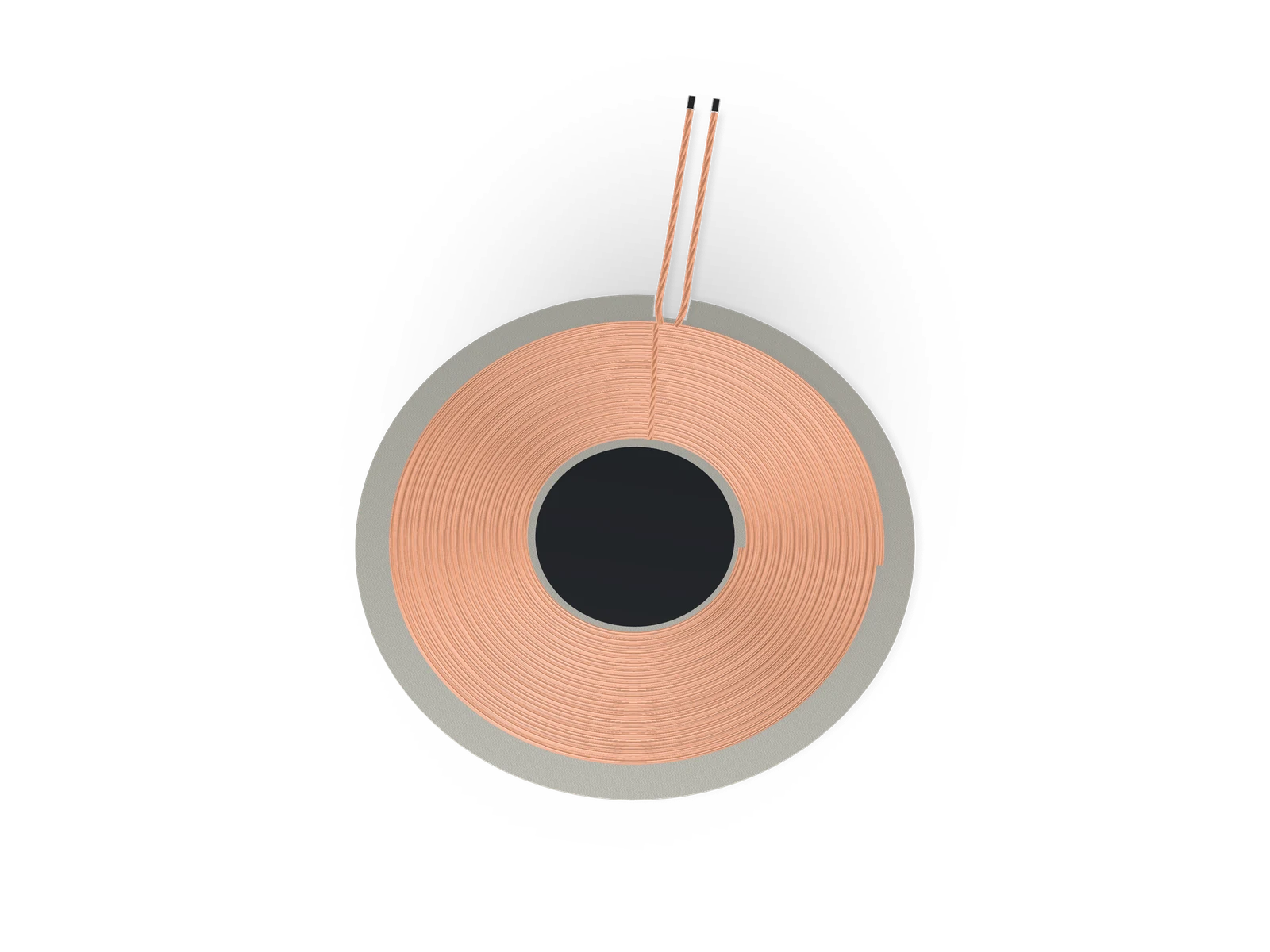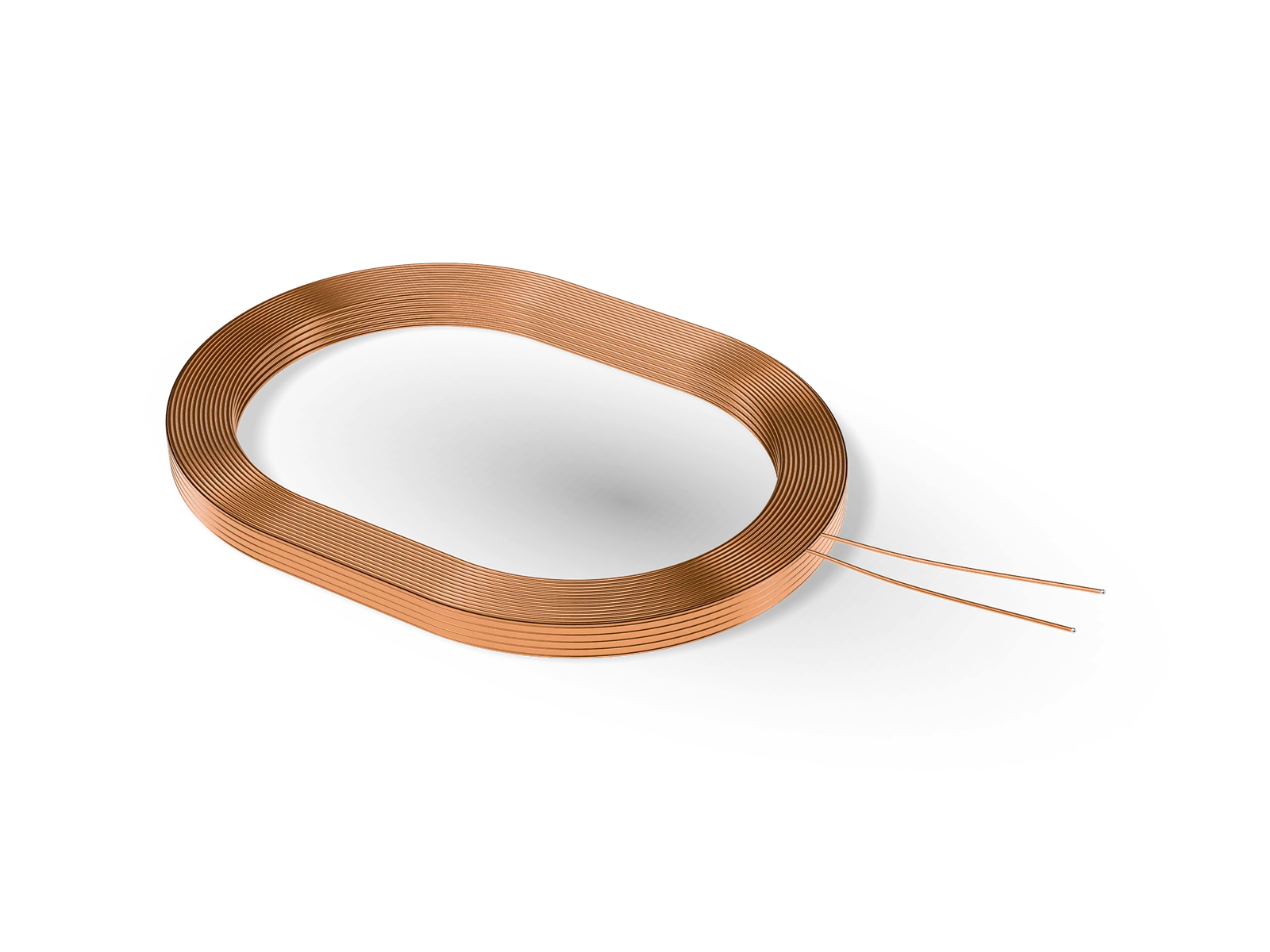
A transmitter coil looks simple: a flat spiral of litz wire on a magnetic plate. Most of its performance is decided by a few choices.
1. Strand size follows the frequency
Current crowds towards the surface of a conductor as frequency rises. In copper the skin depth is about 0.18 mm at 128 kHz and about 0.11 mm at 360 kHz, the fixed frequency used by the Qi2 Magnetic Power Profile. Litz strands well below the skin depth keep the AC resistance, and the heat, down. More, finer strands help, but cost more and are harder to terminate.
2. The shield sets the floor
The plate behind the coil guides the field and protects the electronics underneath. Too thin a plate saturates or lets the field leak into the board, lowering the coil's quality factor and making foreign-object detection less dependable.
3. Alignment matters as much as the coil
Poor alignment wastes power as heat. Qi2 uses a magnet ring to snap the phone into place; single-coil pads without magnets leave alignment to the user.
4. More coils, more placement freedom
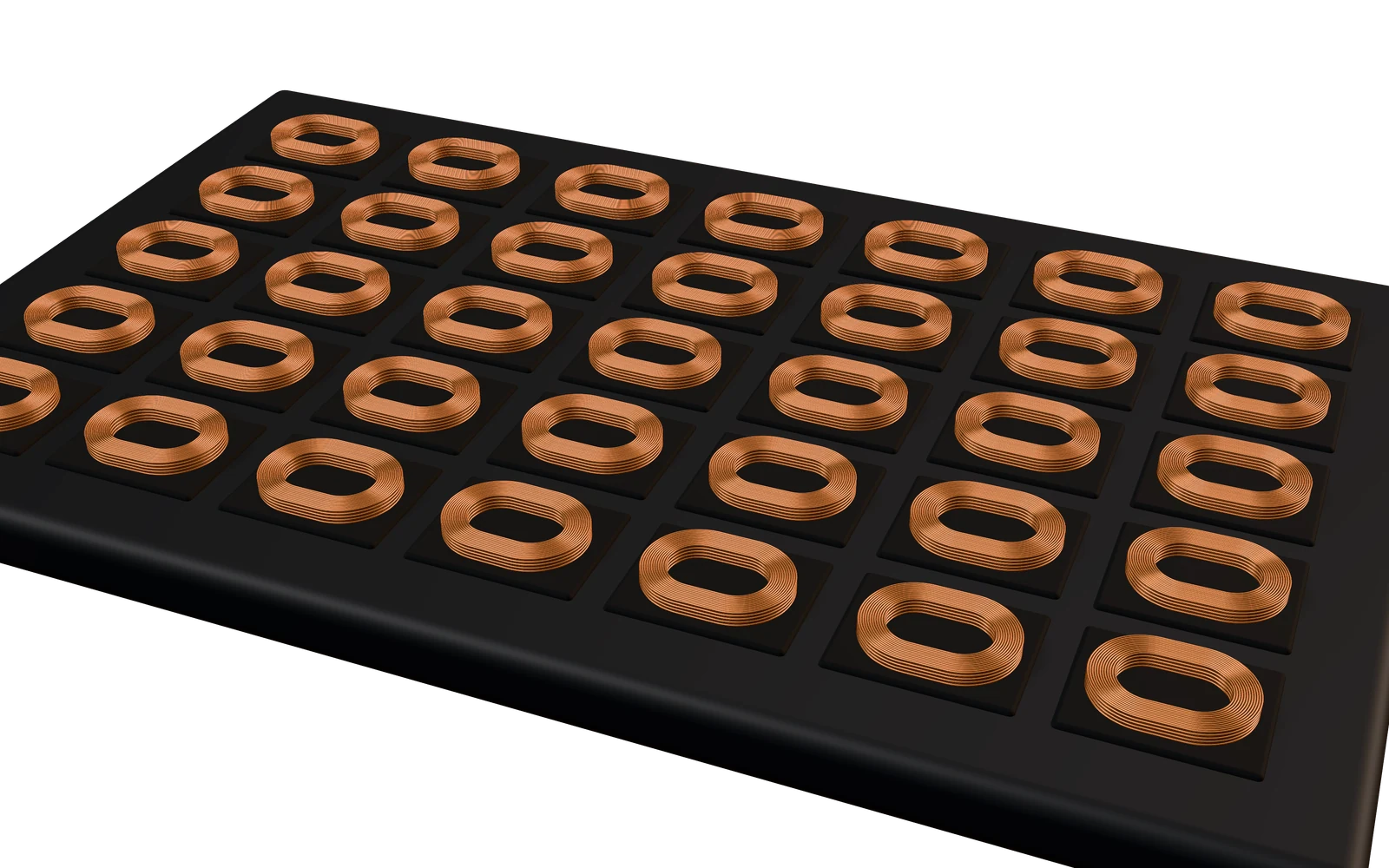
Dual- and triple-coil arrays overlap several coils so a phone charges across a wider area. The controller picks the best-coupled coil, so coil positions must match what the firmware expects.
5. Test in the real stack-up
The distance from coil to charging surface, and every material in between, changes inductance. Quote and test the coil in the stack-up it will be used in.
Questions and answers
- What frequency does Qi2 MPP use?
- The Qi2 Magnetic Power Profile operates at a fixed 360 kHz, so litz strands are chosen for a skin depth of about 0.11 mm.